Modern computing systems rely heavily on the assumption that hardware enforces strict isolation between different regions of memory. Operating systems, hypervisors, and applications are all designed around the idea that memory protection mechanisms are reliable and cannot be bypassed by unprivileged code. However, the discovery of the Rowhammer vulnerability fundamentally challenges this assumption.
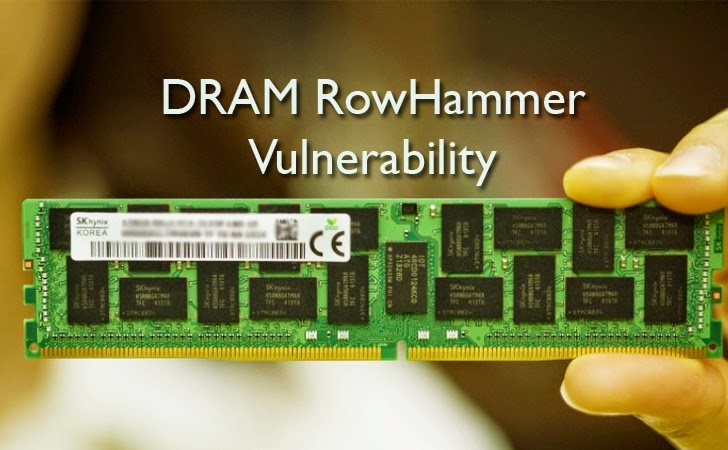
Rowhammer is not a traditional software bug. Instead, it is a hardware-level phenomenon rooted in the physical properties of modern DRAM (Dynamic Random Access Memory). By repeatedly accessing specific memory locations, an attacker can induce unintended bit flips in nearby memory cells. These bit flips can corrupt critical data structures, including those used by the operating system kernel, potentially allowing a malicious process to escalate privileges and take full control of a system.
This article explores the mechanics behind Rowhammer, explains how it can be exploited to gain kernel privileges, and examines the broader implications for system security.
Understanding the Rowhammer Phenomenon
Rowhammer arises from the way DRAM is physically constructed. Memory cells in DRAM are tiny capacitors that store bits as electrical charges. As manufacturing processes have advanced, these cells have become increasingly small and densely packed. While this allows for higher memory capacity, it also introduces new challenges.
When a memory row is accessed repeatedly in rapid succession, the electrical activity can cause disturbance errors in adjacent rows. Specifically, charge may leak into or out of nearby cells, eventually causing bits to flip from 0 to 1 or vice versa. This occurs without any direct access to the affected memory locations.
What makes this particularly dangerous is that the victim memory can belong to a completely different process—or even the operating system kernel. In other words, a user-level program can indirectly modify memory it should never be able to access.
The Mechanics of Row Activation
To understand how Rowhammer works, it is important to examine how DRAM handles memory access. Memory is organized into rows and banks. When the CPU requests data from memory, an entire row is loaded into a structure called the row buffer. After the operation is complete, the row is written back.
Each time a row is activated, its cells are discharged and then recharged. This repeated activation is the key to Rowhammer. If two memory addresses are chosen such that they reside in different rows but within the same bank, rapidly alternating accesses between them forces constant activation of those rows.
This repeated activation creates electrical interference that affects adjacent rows. If performed frequently enough within a short time window—before the memory refresh cycle restores stability—bit flips can occur.
Triggering Bit Flips from User Space
A crucial aspect of Rowhammer exploitation is ensuring that memory accesses reach the DRAM rather than being served from the CPU cache. Modern processors aggressively cache memory operations, which prevents the repeated row activations necessary for the attack.
To bypass this, attackers use specific CPU instructions such as CLFLUSH, which flushes cache lines and forces subsequent reads to access DRAM directly. By combining rapid memory reads with cache flushing, it becomes possible to generate the high-frequency row activations required to trigger disturbance errors.
Interestingly, experiments have shown that certain memory barrier instructions, which might be expected to help synchronize operations, can actually reduce the effectiveness of the attack by slowing down memory access patterns.
From Bit Flips to Exploitation
Inducing random bit flips is only the first step. Turning those flips into a meaningful exploit requires careful targeting and understanding of memory layout.
One particularly effective strategy involves manipulating page table entries (PTEs). Page tables are used by the operating system to map virtual memory addresses to physical memory. If an attacker can flip specific bits within a PTE, they can change the permissions or mappings associated with memory pages.
For example, by flipping a bit that controls write permissions, an attacker may gain write access to memory regions that were previously read-only. Even more critically, modifying the physical address mapping can allow a process to access arbitrary regions of physical memory.
Achieving Kernel Privilege Escalation
In practical demonstrations, researchers have shown that Rowhammer can be used to gain full kernel privileges from an unprivileged user process. The attack works by carefully arranging memory allocations so that sensitive structures—such as page tables—are placed adjacent to attacker-controlled memory.
Once the layout is established, the attacker repeatedly hammers selected memory rows until a bit flip occurs in a target structure. If the flip affects a page table entry in a favorable way, the attacker can gain control over their own page tables.
With control of page tables, the attacker effectively bypasses all memory isolation mechanisms. This allows unrestricted read and write access to physical memory, leading to complete system compromise.
Beyond Linux: Cross-Platform Implications
Although many early demonstrations of Rowhammer exploitation were performed on Linux systems, the vulnerability is not tied to any specific operating system. The underlying issue exists in hardware, meaning that any system using affected DRAM modules could potentially be vulnerable.
The techniques used to exploit Rowhammer may vary depending on system architecture and memory management strategies, but the fundamental principle remains the same. Any environment where memory layout can be influenced and high-frequency memory accesses can be generated is a potential target.
This includes not only desktop and server systems, but also mobile devices, embedded systems, and cloud infrastructure.
Escaping Sandboxes and Other Attack Vectors
Rowhammer is not limited to kernel privilege escalation. It can also be used to break out of restricted execution environments such as sandboxes.
For instance, one demonstrated exploit showed how Rowhammer could be used to escape from a sandboxed environment by flipping bits in security-critical data structures. This highlights the broader impact of the vulnerability: it undermines isolation guarantees at multiple levels of the computing stack.
Other potential attack vectors include corrupting cryptographic keys, modifying application data, or interfering with hypervisor memory in virtualized environments.
Challenges in Mitigation
Mitigating Rowhammer is particularly challenging because it stems from fundamental hardware behavior rather than a software flaw. While some defenses have been introduced, such as increased memory refresh rates and hardware-level detection mechanisms, these solutions are not always sufficient.
Moreover, as DRAM technology continues to evolve, cells are becoming even smaller and more densely packed. This increases the likelihood of disturbance effects and may make future memory even more susceptible to Rowhammer-like attacks.
Software-based mitigations, such as isolating critical memory regions or monitoring access patterns, can help reduce risk but cannot fully eliminate the problem.
The Broader Security Implications
Rowhammer represents a shift in how we think about system security. Traditionally, hardware has been considered a trusted foundation upon which software security mechanisms are built. Rowhammer challenges this assumption by demonstrating that hardware itself can be exploited in unexpected ways.
This has far-reaching implications for the design of secure systems. It suggests that security must be considered not only at the software level, but also at the physical and architectural levels of hardware design.
As attackers continue to explore hardware-based vulnerabilities, it is likely that similar issues will emerge in other components of modern computing systems.
The Rowhammer vulnerability highlights a fundamental weakness in modern DRAM technology, where physical limitations of hardware can be exploited to bypass critical security boundaries. By inducing bit flips in carefully targeted memory locations, attackers can manipulate sensitive data structures and ultimately gain full control over a system.
What makes Rowhammer particularly concerning is its universality. It is not confined to a specific operating system, application, or device type. Instead, it is a consequence of how memory is built and operated at the lowest level.
As the industry continues to push for higher performance and greater memory density, addressing these vulnerabilities will require coordinated efforts between hardware manufacturers, system designers, and security researchers. Without such collaboration, the gap between assumed and actual security guarantees will continue to grow.