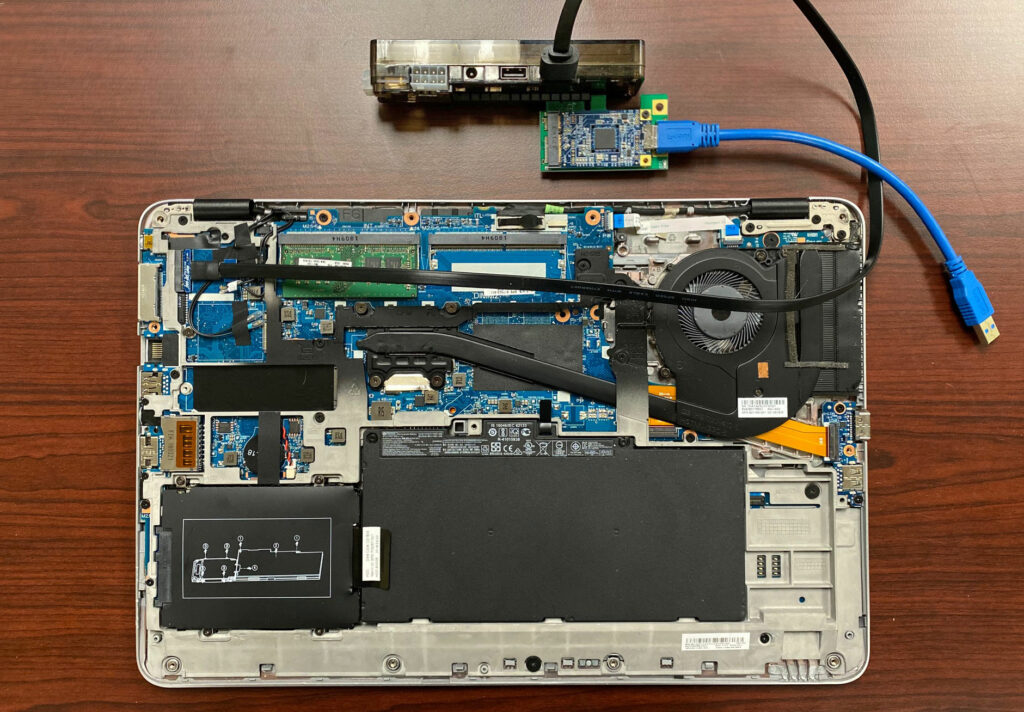
Direct Memory Access (DMA) has long been a cornerstone of high-performance computing systems, enabling peripheral devices to read and write system memory without constant CPU involvement. This capability significantly improves efficiency and throughput, particularly in data-intensive operations such as networking, storage, and graphics processing. However, alongside its performance benefits, DMA introduces a powerful attack surface that can be exploited if not properly controlled.
To mitigate these risks, modern systems rely on Input-Output Memory Management Units (IOMMUs), which enforce access control over memory regions available to DMA-capable devices. IOMMUs are widely regarded as a robust defense mechanism, designed to ensure that devices can only access explicitly authorized memory areas. Despite this, emerging research reveals that these protections are not absolute. Subtle vulnerabilities remain, particularly at finer granularities of memory management.
This article explores the nature of DMA code injection vulnerabilities in systems equipped with IOMMUs, challenging traditional assumptions about their security. It examines how such vulnerabilities arise, how they can be exploited, and how they may be detected, with a focus on modern operating systems such as Linux.
The Limits of IOMMU Protection
IOMMUs operate by translating device-visible addresses into physical memory addresses, enforcing policies that restrict which memory regions a device may access. This mechanism is conceptually similar to how a CPU’s Memory Management Unit (MMU) isolates processes. In practice, however, IOMMUs enforce protection at the granularity of memory pages, typically several kilobytes in size.
While this page-level granularity is sufficient for many use cases, it introduces a critical limitation. Within a single page, multiple data structures may coexist, some of which are intended to be accessible to devices, while others are sensitive and should remain protected. Because the IOMMU cannot distinguish between different regions within the same page, it may inadvertently grant access to sensitive data.
This phenomenon gives rise to what are known as sub-page vulnerabilities. These vulnerabilities exist not because the IOMMU fails outright, but because its design inherently lacks the precision needed to enforce fine-grained isolation.
Rethinking the Source of DMA Vulnerabilities
Conventional wisdom has long held that DMA vulnerabilities primarily arise from poorly written device drivers or flawed driver-level design decisions. According to this view, vulnerabilities are isolated issues, limited to specific components that fail to properly manage memory access.
However, recent research challenges this assumption by demonstrating that the problem often lies deeper within the operating system kernel itself. Rather than being confined to individual drivers, many vulnerabilities emerge from broader architectural decisions that govern how memory is allocated, shared, and managed across the system.
This shift in perspective is significant. It suggests that DMA vulnerabilities are not merely implementation flaws, but structural issues embedded in the design of modern operating systems. As a result, addressing them requires more than patching individual drivers; it demands a re-evaluation of fundamental kernel mechanisms.
Understanding Sub-Page Vulnerabilities
Sub-page vulnerabilities arise when sensitive data structures share memory pages with buffers that are accessible to DMA-capable devices. These structures may include function pointers, callback handlers, or other control-flow-critical elements within the kernel.
When a device is granted access to a memory page for legitimate purposes, it may also gain unintended access to adjacent data within that page. If the device is malicious or compromised, it can modify these sensitive structures, leading to severe consequences.
Research has categorized these vulnerabilities into distinct types based on how memory is shared and how access is granted. While the specific categories vary in their characteristics, they collectively highlight a common theme: the inability of page-level protections to enforce strict isolation within complex memory layouts.
Attributes Enabling Code Injection Attacks
Exploiting sub-page vulnerabilities requires certain conditions to be met. Rather than relying on a single flaw, successful attacks typically depend on a combination of attributes that together enable code injection.
One critical attribute is the presence of writable memory regions accessible to the device. Without the ability to modify memory, an attacker cannot influence system behavior. Another important factor is the existence of sensitive targets within the same memory page, such as pointers that control execution flow.
A third attribute involves the ability to trigger the use of corrupted data. It is not enough to overwrite a pointer; the system must subsequently dereference it in a way that allows the attacker to redirect execution.
When these attributes align, they create a pathway for code injection attacks that can compromise the integrity of the kernel.
Automated Detection of Vulnerabilities
Given the complexity of modern operating systems, manually identifying sub-page vulnerabilities is both time-consuming and error-prone. To address this challenge, researchers have developed automated analysis tools designed to detect patterns indicative of potential vulnerabilities.
These tools analyze kernel code and memory allocation patterns, identifying instances where sensitive data structures may be co-located with DMA-accessible buffers. By examining how memory is mapped and used, the tools can highlight areas where protections may be insufficient.
Applying these tools to the Linux kernel has yielded striking results. A significant proportion of device drivers were found to expose sensitive callback pointers within DMA-accessible memory regions. This widespread exposure underscores the systemic nature of the problem.
Exploiting Kernel Control Flow
One of the most powerful consequences of DMA vulnerabilities is the ability to hijack kernel control flow. By overwriting function pointers or callback handlers, an attacker can redirect execution to arbitrary code.
In practice, this can lead to full system compromise. Once control over the kernel is achieved, the attacker gains unrestricted access to all system resources, including memory, processes, and hardware devices.
What makes this particularly concerning is that such attacks can be carried out by external peripherals. A malicious device connected via a high-speed interface can perform DMA operations that manipulate kernel memory in real time, bypassing traditional software-based defenses.
The Emergence of Compound Attacks
Earlier research on DMA exploitation primarily focused on single-step attacks, in which all necessary conditions for exploitation are present within a single memory page. While effective, these attacks are limited by the requirement that all vulnerability attributes coexist in one location.
Recent work introduces a more sophisticated approach known as compound attacks. In these scenarios, the necessary attributes are not initially present in a single location. Instead, the attacker leverages standard operating system behavior to gradually create the conditions needed for exploitation.
This may involve manipulating memory allocation patterns, triggering specific kernel operations, or exploiting interactions between different subsystems. Over time, these actions bring together the required attributes, enabling a successful attack.
Compound attacks represent a significant evolution in exploitation techniques. They demonstrate that even when individual vulnerabilities appear benign or incomplete, they can be combined in unexpected ways to achieve powerful results.
Implications for System Security
The findings discussed in this research have profound implications for the security of modern computing systems. They challenge the assumption that IOMMUs provide comprehensive protection against DMA attacks and highlight the limitations of current defense mechanisms.
More importantly, they reveal that vulnerabilities are often deeply embedded in system design rather than isolated to specific components. This underscores the need for a holistic approach to security, one that considers interactions between hardware, operating systems, and device drivers.
The widespread presence of vulnerable patterns in widely used systems such as Linux suggests that these issues are not confined to niche environments. Instead, they represent a broad and systemic challenge that must be addressed at multiple levels.
Toward More Robust Defenses
Addressing DMA code injection vulnerabilities requires rethinking how memory is managed and protected. One potential direction involves improving memory isolation at finer granularities, reducing the likelihood of sensitive data sharing pages with DMA-accessible buffers.
Another approach focuses on redesigning kernel data structures to minimize exposure of critical elements. By separating sensitive pointers from device-accessible memory, the risk of exploitation can be significantly reduced.
In addition, enhanced analysis tools and verification techniques can help identify vulnerabilities during development, allowing them to be addressed before deployment.
DMA remains a powerful and essential feature of modern computing, but it also introduces complex security challenges that cannot be fully mitigated by existing mechanisms such as IOMMUs. The presence of sub-page vulnerabilities highlights a fundamental limitation in current protection models, one that attackers can exploit to achieve code injection and kernel compromise.
By demonstrating that these vulnerabilities often stem from kernel design rather than isolated implementation flaws, recent research calls for a shift in how system security is approached. The emergence of compound attacks further emphasizes the need to consider interactions between multiple system components.
Ultimately, securing systems against DMA-based threats will require a combination of improved hardware capabilities, more robust operating system design, and advanced analysis techniques. Only through such comprehensive efforts can the gap between theoretical protection and practical security be effectively closed.